

Abdominal pain is one of the most common reasons patients seek medical care. While occasional stomach discomfort may result from something as simple as indigestion or a mild stomach virus, chronic abdominal pain is a different matter entirely. When abdominal pain persists for weeks or months, it may indicate an underlying digestive condition that requires specialized evaluation and treatment.
Chronic abdominal pain, digestive disorders, and gastrointestinal health are closely linked, and identifying the root cause is often the first step toward lasting relief. Because many different conditions can produce similar symptoms, diagnosing chronic abdominal pain requires a comprehensive approach that combines medical history, physical examination, laboratory testing, and advanced diagnostic procedures.
At Dr. Eduan Deetlefs’ gastroenterology practice, patients benefit from a thorough diagnostic process designed to identify the cause of persistent abdominal discomfort and develop a personalized treatment plan.
What Is Chronic Abdominal Pain?
Chronic abdominal pain is generally defined as pain or discomfort occurring in the abdomen for three months or longer. The pain may be continuous or intermittent and can range from mild discomfort to severe symptoms that interfere with daily life.
Patients often describe chronic abdominal pain as:
- Cramping
- Burning
- Sharp or stabbing pain
- Dull aching
- Bloating and pressure
- Pain associated with eating
- Pain associated with bowel movements
The location of the pain can also provide important clues. Pain in the upper abdomen may suggest stomach, esophageal, gallbladder, or pancreatic conditions, while lower abdominal pain may point toward intestinal disorders.

Why Diagnosing Chronic Abdominal Pain Can Be Challenging
One of the biggest challenges in gastroenterology is that many digestive conditions produce overlapping symptoms.
For example, abdominal pain may be caused by:
- Irritable Bowel Syndrome (IBS)
- Inflammatory Bowel Disease (IBD)
- Gastroesophageal Reflux Disease (GERD)
- Peptic ulcers
- Gallstones
- Food intolerances
- Celiac disease
- Diverticular disease
- Pancreatic disorders
- Colon polyps or colorectal cancer
Because symptoms often overlap, gastroenterologists must carefully investigate the source of pain rather than relying solely on symptom descriptions.
The First Step: A Detailed Medical History
The diagnostic process begins with a comprehensive discussion about the patient’s symptoms.
A gastroenterologist will typically ask:
- When did the pain start?
- Where is the pain located?
- What does the pain feel like?
- Does eating make it worse or better?
- Are bowel habits changing?
- Is there nausea or vomiting?
- Is there unexplained weight loss?
- Is there blood in the stool?
- Is there a family history of digestive diseases?
This information helps narrow down potential causes and guides further testing.
Physical Examination
A physical examination remains an important part of diagnosing chronic abdominal pain.
During the examination, the doctor may:
- Assess abdominal tenderness
- Check for swelling or bloating
- Listen to bowel sounds
- Look for signs of inflammation
- Evaluate for enlarged organs or masses
Certain findings can provide valuable clues that help determine which diagnostic tests should be performed next.
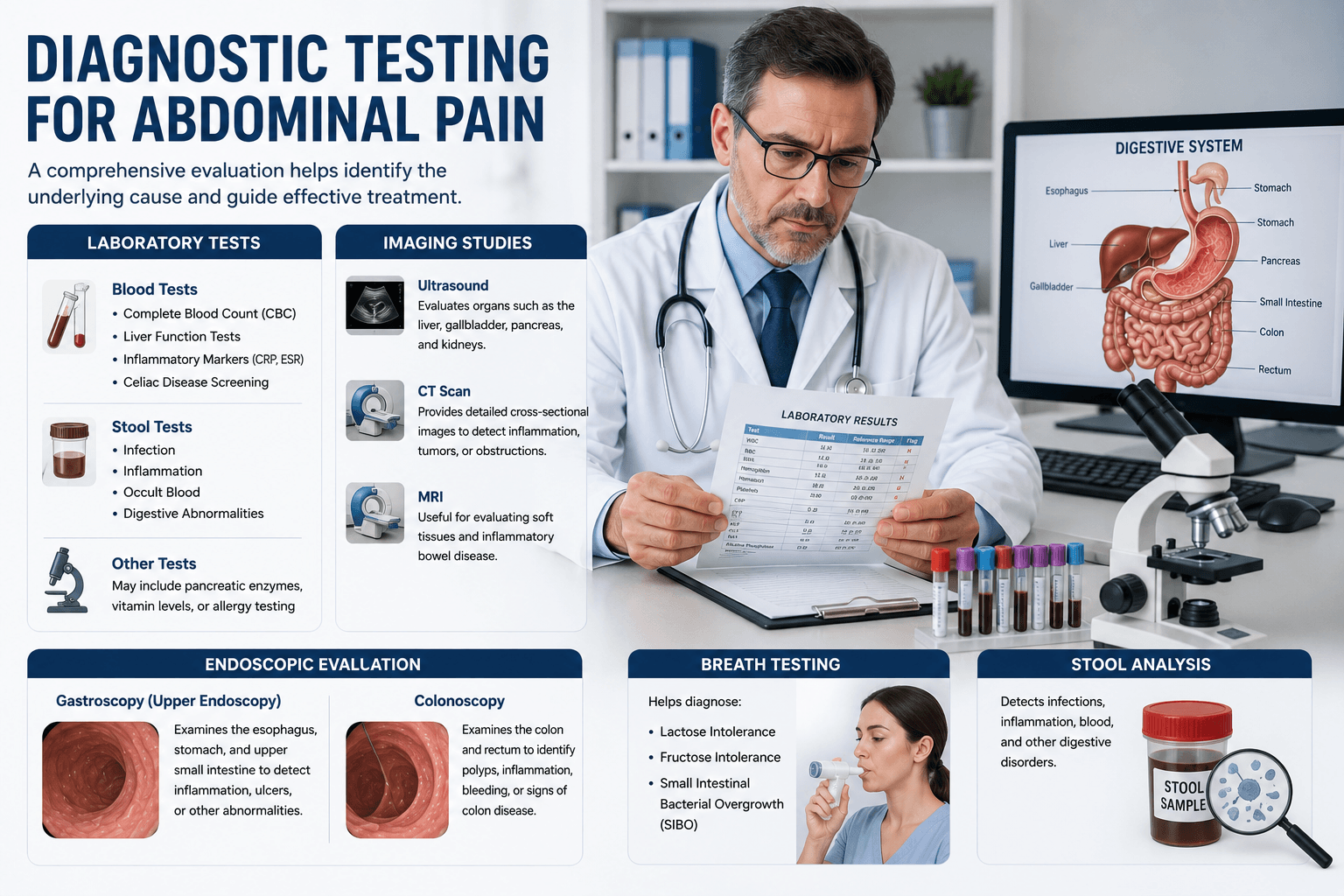
Laboratory Testing
Blood and stool tests are often among the first investigations ordered.
Common blood tests include:
Complete Blood Count (CBC)
A CBC can detect:
- Infection
- Inflammation
- Anemia
- Blood loss
Liver Function Tests
These tests evaluate whether liver or gallbladder problems may be contributing to symptoms.
Inflammatory Markers
Markers such as CRP and ESR can help identify inflammatory conditions like Crohn’s disease or ulcerative colitis.
Celiac Disease Screening
Specific blood tests can detect antibodies associated with celiac disease.
Stool Testing
Stool samples may be analyzed for:
- Infection
- Inflammation
- Occult blood
- Digestive abnormalities
These tests help eliminate many possible causes before more invasive investigations are considered.
Imaging Studies
Imaging plays a crucial role in diagnosing chronic abdominal pain.
Ultrasound
Ultrasound is commonly used to evaluate:
- Gallstones
- Liver disease
- Kidney abnormalities
- Certain abdominal masses
Because ultrasound does not involve radiation, it is often one of the first imaging tests performed.
CT Scan
Computed tomography (CT) scans provide detailed cross-sectional images of the abdomen and pelvis.
CT scans can help identify:
- Inflammation
- Tumors
- Diverticulitis
- Bowel obstruction
- Abscesses
MRI
Magnetic Resonance Imaging (MRI) offers highly detailed imaging and is particularly useful in evaluating inflammatory bowel disease and certain liver disorders.
Endoscopy: Looking Directly Inside the Digestive Tract
One of the most valuable tools available to gastroenterologists is endoscopy.
Endoscopic procedures allow doctors to directly examine the lining of the digestive tract and identify abnormalities that may not appear on imaging studies.
Gastroscopy
A gastroscopy involves passing a thin flexible camera through the mouth into the esophagus, stomach, and upper small intestine.
Gastroscopy can diagnose:
- Gastritis
- Peptic ulcers
- GERD
- Hiatal hernias
- Barrett’s esophagus
- Stomach cancer
Biopsies can also be taken during the procedure for further analysis.
Colonoscopy
A colonoscopy examines the large intestine and rectum.
This procedure can detect:
- Colon polyps
- Colorectal cancer
- Crohn’s disease
- Ulcerative colitis
- Diverticular disease
For patients with unexplained lower abdominal pain, colonoscopy often provides critical diagnostic information.

Advanced Functional Testing
Sometimes standard tests fail to reveal the cause of chronic abdominal pain.
In these situations, advanced functional testing may be required.
pH Monitoring
This test measures acid exposure in the esophagus and helps diagnose GERD.
Esophageal Manometry
Manometry evaluates muscle contractions within the esophagus and assesses the function of the lower esophageal sphincter.
Breath Testing
Breath tests can help diagnose:
- Lactose intolerance
- Fructose intolerance
- Small Intestinal Bacterial Overgrowth (SIBO)
These tests are particularly useful when symptoms include bloating, gas, and abdominal discomfort.
When Biopsies Are Necessary
In some cases, tissue samples must be collected to establish an accurate diagnosis.
Biopsies can help diagnose:
- Celiac disease
- Microscopic colitis
- Barrett’s esophagus
- Stomach infections
- Gastrointestinal cancers
Biopsies are usually painless and can often be performed during endoscopy or colonoscopy procedures.
Red Flag Symptoms That Require Urgent Investigation
While many causes of abdominal pain are not life-threatening, some symptoms warrant immediate medical evaluation.
These include:
- Unexplained weight loss
- Persistent vomiting
- Difficulty swallowing
- Blood in the stool
- Black stools
- Severe anemia
- Night-time symptoms
- Family history of gastrointestinal cancer
The presence of these symptoms often prompts more urgent testing.
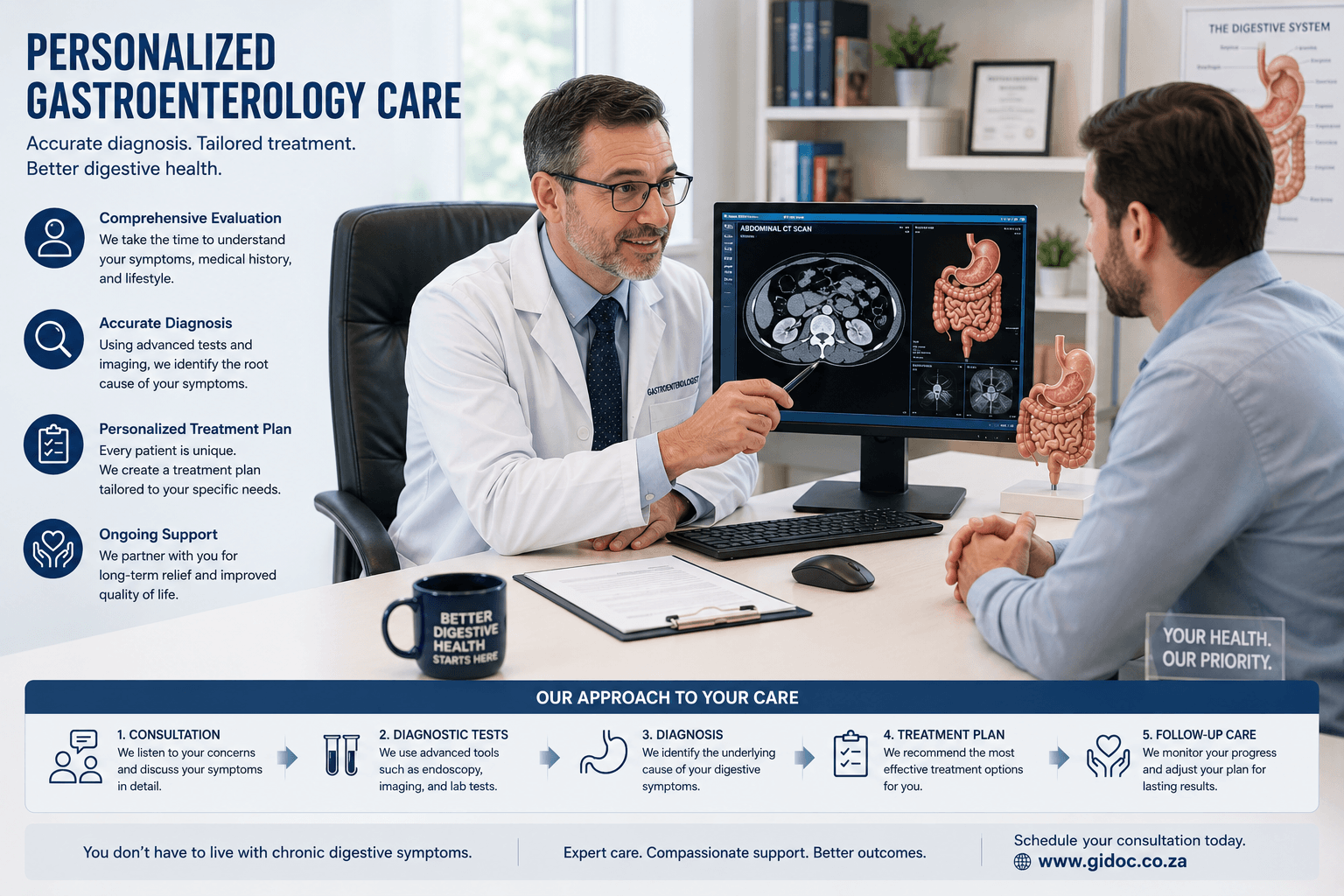
How Gastroenterologists Develop a Treatment Plan
Once the underlying cause is identified, treatment can begin.
Depending on the diagnosis, treatment may include:
- Dietary modifications
- Medication
- Endoscopic procedures
- Lifestyle changes
- Surgical intervention when necessary
The goal is not simply to relieve symptoms but to address the root cause of the condition and prevent complications.
Why Early Diagnosis Matters
Many digestive conditions become easier to manage when diagnosed early.
Prompt diagnosis can:
- Prevent complications
- Improve quality of life
- Reduce chronic pain
- Identify serious diseases early
- Improve treatment outcomes
Patients who delay seeking care may unknowingly allow underlying conditions to progress.

Conclusion
Chronic abdominal pain is not a condition that should be ignored or simply managed with over-the-counter remedies. Because numerous digestive disorders can cause similar symptoms, accurate diagnosis requires specialized evaluation by an experienced gastroenterologist. Through a combination of medical history, physical examination, laboratory testing, imaging studies, endoscopy, and advanced functional assessments, gastroenterologists can identify the root cause of persistent abdominal discomfort and develop effective treatment strategies.
At Dr. Eduan Deetlefs’ gastroenterology practice, patients receive comprehensive diagnostic evaluations and evidence-based treatment plans tailored to their individual needs. Whether symptoms are caused by GERD, inflammatory bowel disease, ulcers, food intolerances, or other gastrointestinal conditions, early diagnosis is essential for achieving the best possible outcomes.
If you are experiencing ongoing abdominal pain, bloating, digestive discomfort, or unexplained gastrointestinal symptoms, contact Dr. Eduan Deetlefs to schedule a consultation.
Expert evaluation and timely treatment can help restore your digestive health and improve your quality of life.
GIDoc Cape Town

Patient-focused GI treatments and procedures in Cape Town.
Monday-Friday 8AM-4PM.
Connect with Us

© Dr. Eduan Deetlefs, Registered Gastroenterologist, GI Doc Cape Town
Our website information is not intended or implied to be a substitute for professional medical advice, diagnosis or treatment. Please consult a doctor about your specific condition. Only a trained physician can determine an accurate diagnosis and proper treatment.