
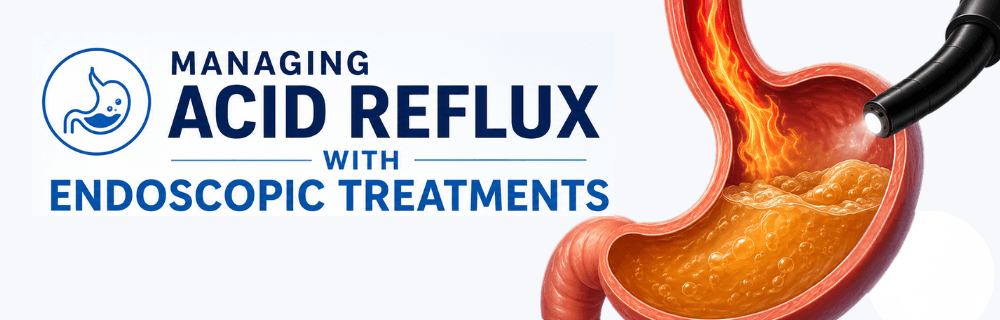
Acid reflux, gastroesophageal reflux disease (GERD), and chronic heartburn are among the most common digestive conditions affecting adults worldwide. While occasional reflux after a heavy meal is normal, persistent acid reflux can significantly impact quality of life and may lead to serious complications if left untreated. Symptoms such as burning chest discomfort, regurgitation, chronic cough, hoarseness, difficulty swallowing, and disturbed sleep can become increasingly difficult to manage over time.
For many patients, lifestyle changes and medication provide relief. However, some individuals continue to experience symptoms despite treatment, while others develop complications that require more advanced intervention. Fortunately, modern gastroenterology now offers a range of minimally invasive endoscopic treatments that can help manage acid reflux effectively without the need for major surgery.
At GI Doc Cape Town, Dr Eduan Deetlefs offers comprehensive evaluation and advanced endoscopic treatment options for patients suffering from GERD and its complications.
Through diagnostic gastroscopy, therapeutic endoscopy, treatment of Barrett’s oesophagus, dilatation of strictures, and specialised reflux management, patients can receive personalised care designed to improve long-term digestive health.
Understanding Acid Reflux and GERD
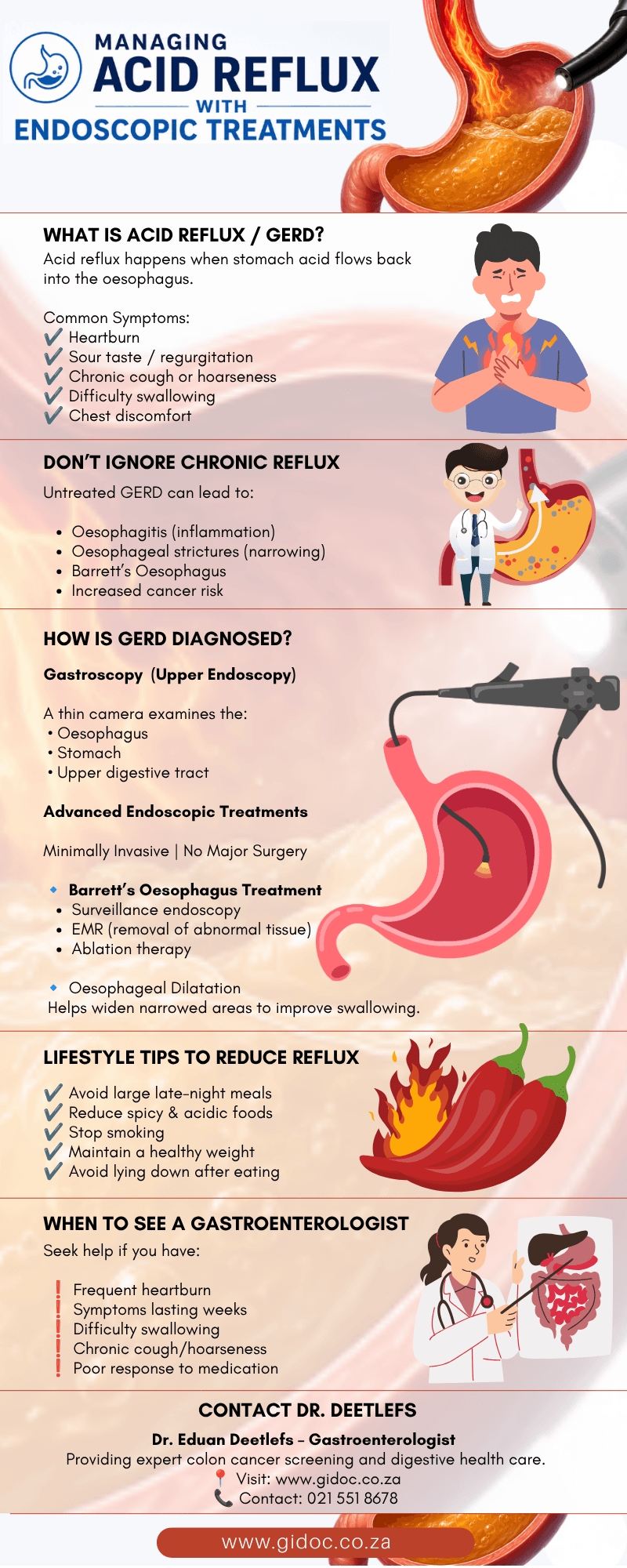
Acid reflux occurs when stomach acid flows backward into the oesophagus. Normally, a muscular valve called the lower oesophageal sphincter (LES) prevents stomach contents from moving upward. When this valve weakens or relaxes abnormally, acid can travel back into the oesophagus, causing irritation and inflammation.
Occasional reflux is common and may occur after large meals, spicy foods, alcohol consumption, or lying down shortly after eating.
However, when reflux becomes frequent or severe, it is classified as gastroesophageal reflux disease (GERD).
Common symptoms of GERD include:
- Burning chest pain or heartburn
- Sour taste in the mouth
- Regurgitation of food or acid
- Chronic throat irritation
- Persistent cough
- Hoarseness
- Difficulty swallowing
- Chest discomfort
- Bloating and nausea
Some patients experience “silent reflux,” where throat symptoms occur without obvious heartburn. Others may mistake reflux symptoms for cardiac problems due to chest pain or discomfort.
Without proper treatment, chronic reflux can damage the lining of the oesophagus and increase the risk of complications.

Why Chronic Acid Reflux Should Not Be Ignored
Many people self-manage reflux symptoms with over-the-counter medications for years without investigating the underlying cause. While antacids and acid-suppressing medications can provide relief, persistent reflux may indicate more serious disease.
Untreated GERD can lead to:
- Oesophagitis (inflammation of the oesophagus)
- Oesophageal ulcers
- Bleeding
- Narrowing of the oesophagus (strictures)
- Difficulty swallowing
- Barrett’s oesophagus
- Increased risk of oesophageal cancer
Because symptoms alone do not always reflect the severity of disease, specialist evaluation is important when reflux becomes chronic, severe, or resistant to treatment.
At GI Doc Cape Town, Dr Deetlefs provides advanced diagnostic investigations to assess reflux severity, identify complications, and determine the most effective treatment strategy for each patient.
The Role of Gastroscopy in Acid Reflux Management
Gastroscopy, also known as upper endoscopy, is one of the most important tools in evaluating acid reflux and GERD.
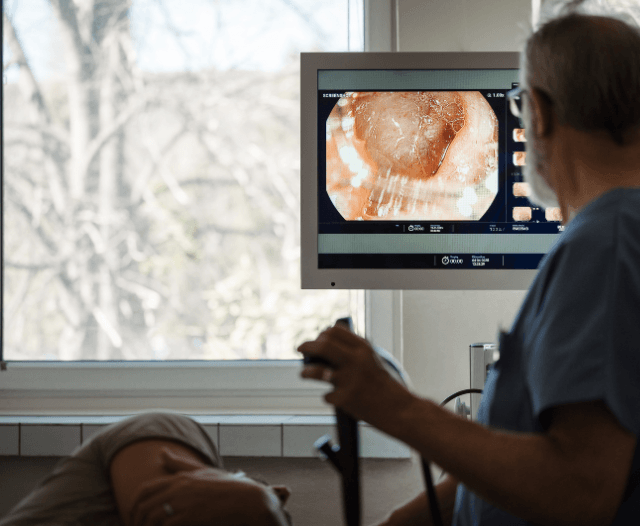
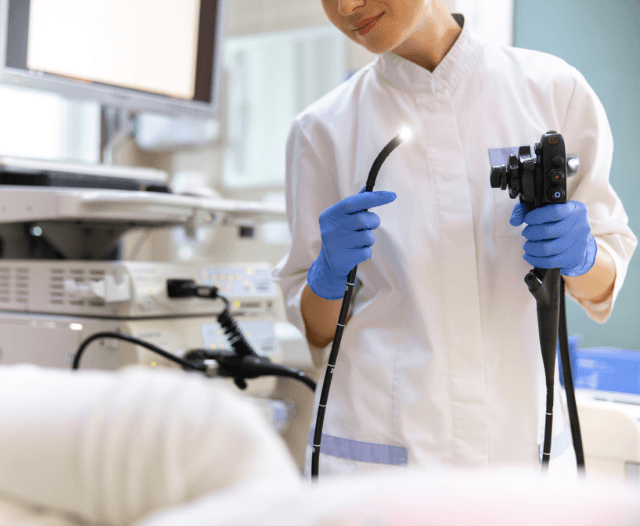
During the procedure, a thin flexible camera is passed through the mouth into the oesophagus, stomach, and upper small intestine. This allows direct visualisation of inflammation, ulcers, narrowing, abnormal tissue changes, and other complications associated with reflux disease.
Gastroscopy may be recommended for patients with:
- Persistent reflux symptoms
- Difficulty swallowing
- Chronic cough or throat irritation
- Unexplained chest pain
- Suspected Barrett’s oesophagus
- Bleeding or anaemia
- Symptoms not responding to medication
The procedure also allows biopsies to be taken if abnormal tissue is detected. These samples can help diagnose Barrett’s oesophagus, infections, inflammation, or precancerous changes.
Dr Deetlefs performs diagnostic and therapeutic gastroscopy using advanced endoscopic technology, helping patients receive accurate diagnoses and early intervention before complications worsen.
Barrett’s Oesophagus: A Serious Reflux Complication
One of the most important complications of chronic acid reflux is Barrett’s oesophagus. This condition develops when repeated exposure to stomach acid causes changes in the cells lining the lower oesophagus.
Although Barrett’s oesophagus itself may not cause additional symptoms, it is considered a precancerous condition because it increases the risk of oesophageal adenocarcinoma.
Risk factors for Barrett’s oesophagus include:
- Long-standing GERD
- Chronic heartburn
- Obesity
- Smoking
- Hiatal hernia
- Male gender
- Age over 50
Because Barrett’s oesophagus can develop silently, many patients are unaware they have it until an endoscopy is performed.
Early diagnosis is essential because endoscopic treatments can remove or destroy abnormal tissue before cancer develops.

Endoscopic Treatment for Barrett’s Oesophagus
Modern therapeutic endoscopy has transformed the management of Barrett’s oesophagus. Instead of requiring major surgery, many patients can now undergo minimally invasive endoscopic procedures that target abnormal tissue directly.
Dr Deetlefs offers advanced Barrett’s oesophagus management including:
- Surveillance endoscopy
- Endoscopic mucosal resection (EMR)
- Ablation therapy
- Biopsy monitoring
- Long-term reflux management
Endoscopic Mucosal Resection (EMR)
EMR involves removing abnormal or precancerous tissue from the oesophageal lining using specialised endoscopic instruments. This procedure allows targeted treatment while preserving healthy surrounding tissue.
EMR is commonly used when abnormal cells or early cancerous changes are detected during surveillance endoscopy.
Ablation Therapy
Ablation techniques destroy abnormal Barrett’s tissue using controlled energy delivery. This allows healthy tissue to regrow while reducing cancer risk.
Endoscopic ablation is minimally invasive and can often be performed without hospital admission.
These advanced therapies allow earlier intervention and may prevent progression to oesophageal cancer.
Managing Oesophageal Strictures with Endoscopic Dilatation
Chronic acid exposure can sometimes cause scar tissue formation within the oesophagus. Over time, this may narrow the oesophageal passage, leading to a condition called oesophageal stricture.
Patients with strictures often experience:
- Difficulty swallowing
- Food getting stuck
- Pain when swallowing
- Weight loss
- Regurgitation
Endoscopic dilatation is an effective minimally invasive treatment for oesophageal strictures.
During the procedure, specialised instruments gently stretch the narrowed section of the oesophagus, improving swallowing and relieving obstruction.
Dr Deetlefs performs oesophageal dilatation procedures for patients with reflux-related strictures and other causes of oesophageal narrowing. In severe cases, stent placement may also be considered to maintain oesophageal patency.
The Connection Between Hiatal Hernias and Reflux
A hiatal hernia occurs when part of the stomach pushes upward through the diaphragm into the chest cavity. This can weaken the lower oesophageal sphincter and worsen acid reflux symptoms.
Many patients with chronic GERD also have hiatal hernias.
Gastroscopy can help identify hiatal hernias and assess the degree of reflux-related damage within the oesophagus.
Understanding whether a hiatal hernia contributes to reflux symptoms helps guide long-term treatment decisions.
Lifestyle Changes Still Matter
While advanced endoscopic treatments can be highly effective, lifestyle modification remains an important part of reflux management.
Patients are often advised to:
- Avoid large late-night meals
- Reduce alcohol intake
- Limit spicy or acidic foods
- Stop smoking
- Maintain a healthy weight
- Elevate the head of the bed
- Avoid lying down after meals
These measures may reduce symptom severity and improve the effectiveness of medical or endoscopic treatment.
Dr Deetlefs works closely with patients to develop personalised management plans that combine lifestyle modification, medication when necessary, and advanced procedural intervention when indicated.
When Should You See a Gastroenterologist?
Many people ignore reflux symptoms for years, assuming heartburn is simply a normal inconvenience. However, persistent symptoms should always be evaluated by a specialist, particularly if they interfere with daily life or worsen over time.
You should consider seeing a gastroenterologist if you experience:
- Frequent heartburn
- Symptoms lasting longer than several weeks
- Difficulty swallowing
- Unexplained weight loss
- Chronic cough or hoarseness
- Chest discomfort
- Regurgitation
- Poor response to medication
- Bleeding or black stools
Early investigation can identify complications before they become severe and may significantly improve long-term outcomes.
Advanced Reflux Care at GI Doc Cape Town
At GI Doc Cape Town, patients receive comprehensive reflux evaluation and advanced endoscopic care tailored to their individual needs. Dr Eduan Deetlefs combines expertise in diagnostic gastroscopy, therapeutic endoscopy, Barrett’s oesophagus management, oesophageal dilatation, and minimally invasive GI procedures to help patients manage chronic acid reflux effectively.
Modern endoscopic treatments now allow many reflux-related complications to be treated without invasive surgery, offering shorter recovery times and improved patient comfort.
For patients living with chronic heartburn, swallowing difficulties, or reflux complications, early specialist evaluation can make a significant difference in both symptom control and long-term digestive health.
To learn more about reflux management and advanced endoscopic treatments, visit GI Doc Cape Town or contact the practice through GI Doc Contact Page.
GIDoc Cape Town

Patient-focused GI treatments and procedures in Cape Town.
Monday-Friday 8AM-4PM.
Connect with Us

© Dr. Eduan Deetlefs, Registered Gastroenterologist, GI Doc Cape Town
Our website information is not intended or implied to be a substitute for professional medical advice, diagnosis or treatment. Please consult a doctor about your specific condition. Only a trained physician can determine an accurate diagnosis and proper treatment.