
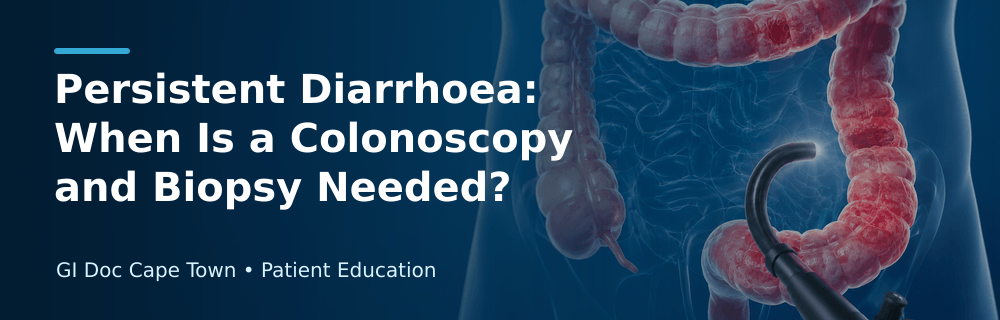
Persistent diarrhoea, unexplained weight loss and ongoing abdominal pain should not automatically be blamed on stress, food intolerance or a short-lived stomach infection. When loose or watery stools continue, recur frequently or occur with warning symptoms, they may signal inflammation, infection, medication-related injury or another digestive condition that needs proper investigation. A colonoscopy allows a gastroenterologist to inspect the colon directly, while biopsies can reveal microscopic disease that is invisible during the examination.
Diarrhoea is usually described as passing loose or watery stools more often than is normal for the individual. A brief episode is commonly caused by infection or a change in diet and often settles within several days. Persistent or chronic diarrhoea is different. Doctors generally use the term chronic diarrhoea when symptoms continue for four weeks or longer, although earlier assessment may be necessary when symptoms are severe or accompanied by red flags.
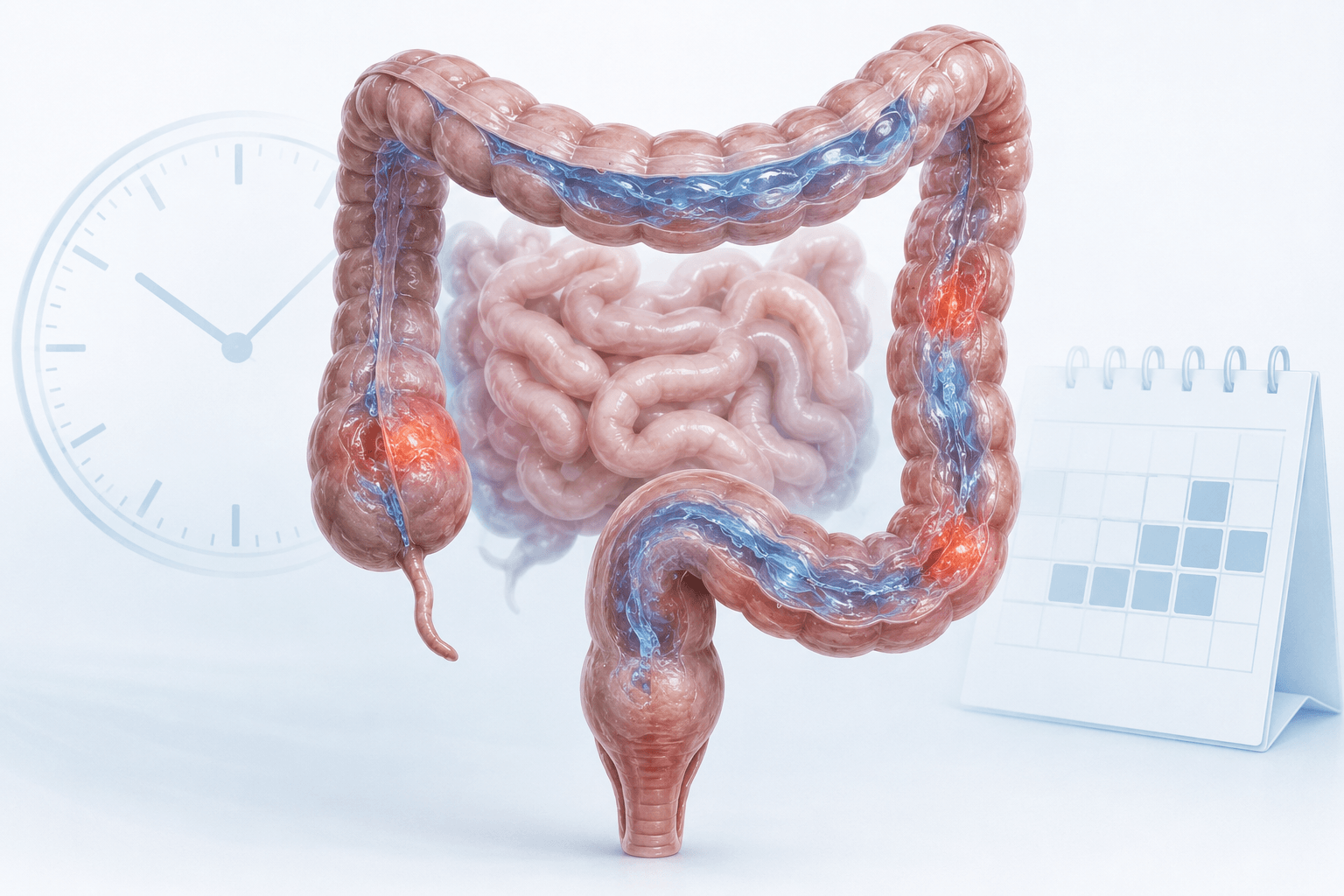 Persistent diarrhoea may arise from inflammatory, infectious, medication-related or functional causes.
Why persistent diarrhoea needs a structured investigation
Diarrhoea is a symptom rather than a diagnosis. Different conditions can produce very similar bowel changes, so treatment based only on symptoms may delay the correct diagnosis. For example, irritable bowel syndrome with diarrhoea can cause urgency and loose stools without visible inflammation, while inflammatory bowel disease may produce diarrhoea through active inflammation and ulceration. Microscopic colitis may cause frequent watery diarrhoea even though the colon appears normal during colonoscopy.
A gastroenterologist begins by considering the pattern of symptoms, the patient’s age, recent travel, diet, medicines, family history and other health conditions. Important questions include:
- How long have the symptoms been present?
- Are stools watery, greasy, bloody or associated with mucus?
- Does diarrhoea wake the patient at night?
- Is there urgency, incontinence, fever, pain or weight loss?
- Have antibiotics, anti-inflammatory pain medicines or other drugs been used?
- Is there a family history of inflammatory bowel disease, coeliac disease or colorectal cancer?
These details help distinguish between possible infectious, inflammatory, malabsorptive, medication-related and functional causes.
What may cause diarrhoea that does not settle?
Persistent diarrhoea has many possible causes. Some can be identified with blood or stool tests, while others require imaging, endoscopy or biopsy.
Inflammatory bowel disease
Crohn’s disease and ulcerative colitis are the two main forms of inflammatory bowel disease (IBD). They may cause ongoing diarrhoea, abdominal pain, blood or mucus in the stool, fatigue, anaemia, fever and weight loss. Symptoms can vary, and not every patient has visible bleeding.
A colonoscopy helps the specialist examine the colon and the final part of the small intestine, identify inflammation or ulcers and collect tissue samples. Biopsy findings help confirm the diagnosis and distinguish Crohn’s disease from ulcerative colitis and other forms of colitis. Patients living with Crohn’s disease or ulcerative colitis may also find information about IBD research and clinical studies useful when discussing future treatment options with their specialist.
Microscopic colitis
Microscopic colitis is an important cause of chronic, usually non-bloody watery diarrhoea. Its name reflects how it is diagnosed: the inflammation is seen under a microscope rather than necessarily being visible during colonoscopy. The colon lining may look healthy to the naked eye, so biopsies from appropriate areas of the colon are essential when the condition is suspected.
There are two main forms, collagenous colitis and lymphocytic colitis. Both can cause frequent watery stools, urgency, night-time diarrhoea, abdominal discomfort, fatigue and weight loss. The Mayo Clinic’s microscopic colitis guidance confirms that a colon tissue sample is needed because the bowel can appear normal during the examination.
Infection
Some infections last longer than the typical stomach bug, especially after travel, contaminated food or water, recent antibiotic use or in people with weakened immunity. Stool tests are usually performed before colonoscopy when an infectious cause is possible. This can include testing for bacteria, parasites or Clostridioides difficile. A colonoscopy is not the first test for most uncomplicated infections, but it may be considered when symptoms persist and routine testing does not provide an answer.
Coeliac disease and malabsorption
Coeliac disease is an immune reaction to gluten that damages the lining of the small intestine. It can cause diarrhoea, bloating, anaemia, nutrient deficiencies and weight loss. Blood tests are often used first. If results or symptoms suggest coeliac disease, a gastroscopy with duodenal biopsies may be recommended rather than colonoscopy alone.
Other problems involving digestion or absorption, including pancreatic disorders, bile acid diarrhoea and certain food intolerances, may require specialised tests. This is why the investigation should be tailored rather than relying on one procedure for every patient.
Medicines and supplements
Antibiotics, metformin, magnesium-containing products, laxatives, proton-pump inhibitors, some antidepressants and non-steroidal anti-inflammatory medicines can contribute to diarrhoea in certain people. Medicines may also be associated with microscopic colitis. Patients should provide a complete list of prescription medication, over-the-counter products and supplements, but should not stop prescribed treatment without medical advice.
Irritable bowel syndrome
Irritable bowel syndrome (IBS) can cause abdominal pain linked to bowel movements, bloating, urgency and altered stool consistency. However, IBS should not be assumed when warning signs are present. The Mayo Clinic’s IBS diagnostic guidance highlights red flags such as weight loss, rectal bleeding, fever, night-time diarrhoea and iron-deficiency anaemia, which may prompt further testing.
Which warning signs may make colonoscopy more urgent?
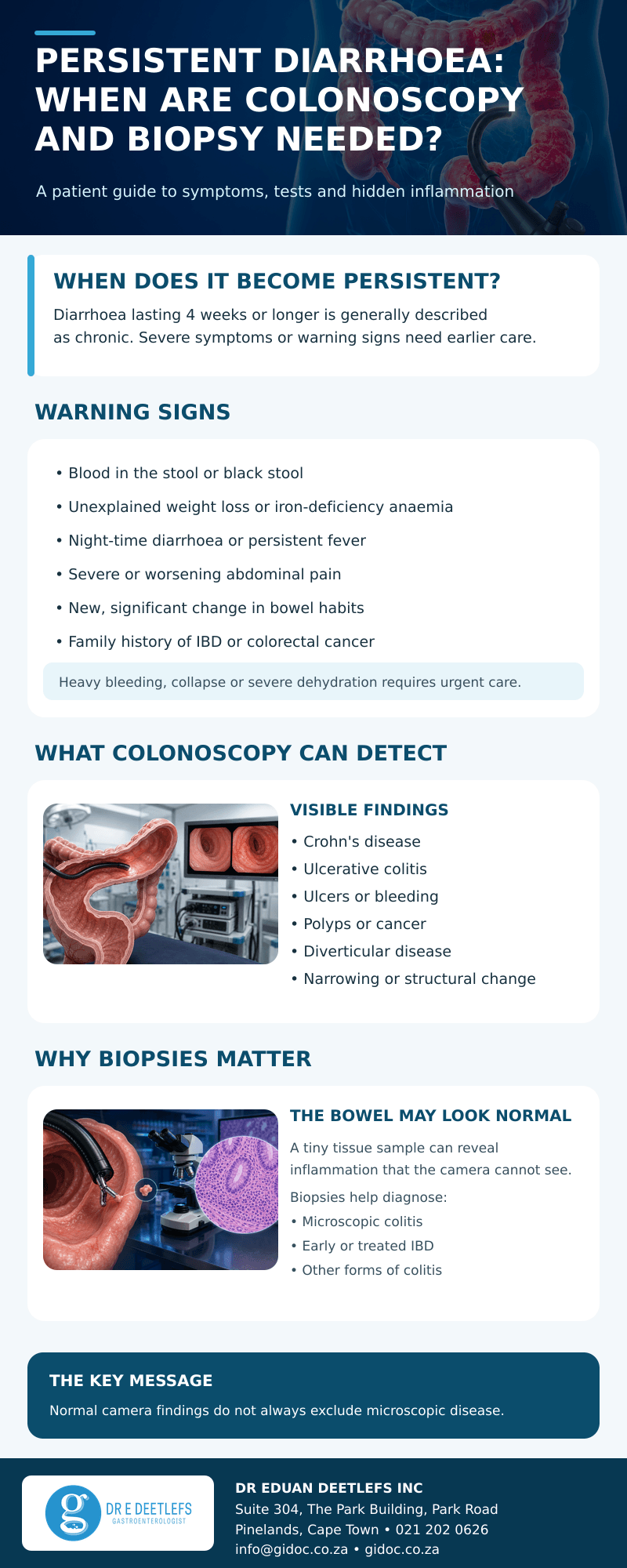
Not everyone with diarrhoea requires a colonoscopy. The decision depends on symptoms, examination findings, age, test results and individual risk. Colonoscopy is more likely to be recommended when diarrhoea is persistent or accompanied by:
- Blood in the stool or black, tar-like stool
- Unexplained weight loss
- Iron-deficiency anaemia
- Night-time symptoms that wake the patient
- Ongoing or severe abdominal pain
- Fever or signs of inflammation
- A significant change in normal bowel habits
- A family history of colorectal cancer, polyps or inflammatory bowel disease
- Abnormal stool, blood or imaging results
- New symptoms in an older adult
- Symptoms that do not improve with appropriate initial management
The National Institute of Diabetes and Digestive and Kidney Diseases lists diarrhoea, rectal bleeding, abdominal pain and unexplained weight loss among the reasons doctors may use colonoscopy to investigate digestive symptoms.
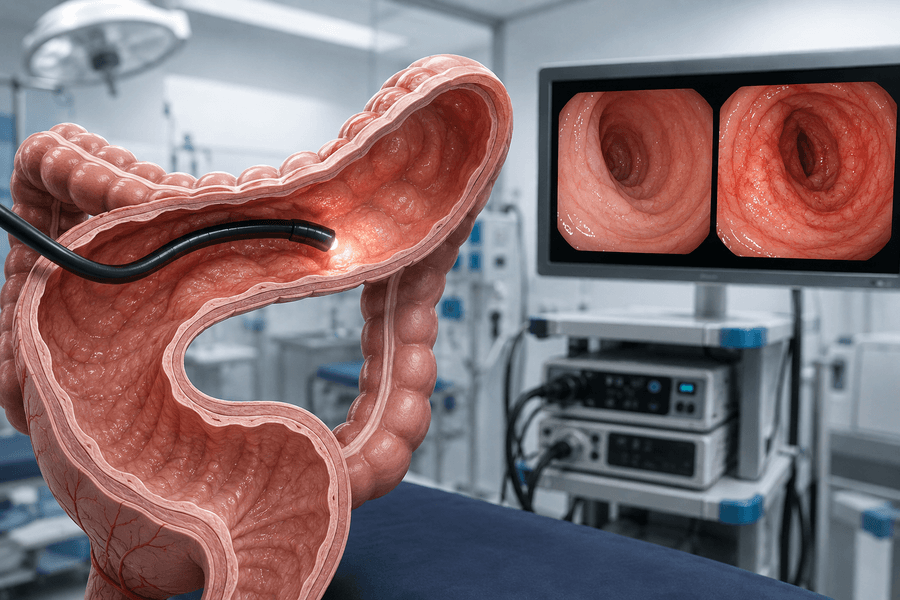 Colonoscopy provides a direct view of the colon and allows tissue samples to be collected.
What happens before colonoscopy is considered?
The initial assessment may include a physical examination and tests selected according to the patient’s history. Blood tests can look for anaemia, inflammation, electrolyte disturbance, thyroid disease or evidence of coeliac disease. Stool studies may check for infection, blood or markers of intestinal inflammation such as faecal calprotectin.
These tests help guide the next step, but normal results do not exclude every condition. In microscopic colitis, for example, the colon may look normal and inflammatory markers may be normal or only mildly raised. Persistent symptoms still deserve review when the clinical picture remains concerning.
Imaging may be useful when small-bowel disease, complications of Crohn’s disease, pancreatic disease or another structural problem is suspected. A capsule endoscopy or double-balloon enteroscopy may be considered when symptoms and results point beyond the reach of standard gastroscopy and colonoscopy.
What can colonoscopy detect?
During colonoscopy, a flexible camera is passed through the rectum to examine the lining of the colon. The procedure can identify:
- Inflammation associated with ulcerative colitis or Crohn’s disease
- Ulcers, erosions and bleeding sites
- Colorectal polyps
- Diverticular disease
- Colorectal cancer
- Some infectious or medication-related patterns of colitis
- Narrowing or other structural abnormalities
The specialist may also examine the terminal ileum, which is the final part of the small intestine and a common site of Crohn’s disease. If a polyp or another suitable lesion is found, it may sometimes be removed during the same procedure. GI Doc provides a broader overview of its gastroenterology treatments and procedures, including diagnostic and therapeutic endoscopy.
Why take biopsies if the colon looks normal?
A biopsy is a very small tissue sample taken through the colonoscope. The patient does not usually feel it being collected. A pathologist then examines the sample under a microscope for inflammation, abnormal cells and other changes.
This step matters because a normal-looking colon does not always mean the tissue is normal. Microscopic colitis is the clearest example, but biopsies can also help assess early or treated IBD, infection and other forms of colitis. Samples may be taken from several sections because microscopic changes can be patchy.
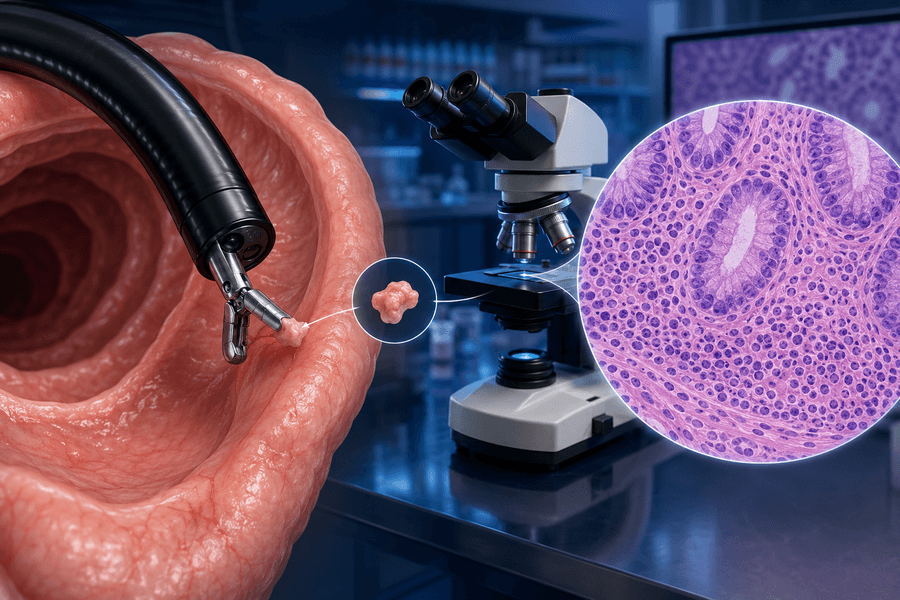 Biopsies may reveal inflammation that is not visible during colonoscopy.
A biopsy does not mean that cancer is suspected. It is a standard diagnostic tool that can provide information unavailable from the camera view alone. Patients awaiting pathology results should ask when and how these will be communicated, as the final diagnosis may depend on the laboratory report rather than the immediate visual findings.
Preparing for the procedure
The bowel needs to be clean so the specialist can inspect the lining thoroughly. Patients receive specific instructions about a clear-fluid diet and bowel-cleansing medication. Following these instructions closely improves visibility and reduces the chance that the examination will need to be repeated.
Before the procedure, patients should discuss all medicines, allergies and medical conditions with the team. Blood thinners and diabetes medication may require individual instructions. These medicines must not be changed without guidance from the prescribing clinician or endoscopy team.
Sedation is commonly used, so patients generally need someone to take them home. They should follow the practice’s instructions about driving, alcohol, work and important decisions after the procedure. The Mayo Clinic colonoscopy overview explains that colonoscopy is used both for screening and for investigating long-lasting diarrhoea, bleeding and other bowel symptoms.
What happens after colonoscopy?
Temporary bloating, gas or mild cramping can occur after the examination. The doctor may explain visible findings before discharge, while biopsy results usually take longer. Treatment depends on the diagnosis and may include medication, dietary management, correction of fluid or nutrient deficiencies, treatment of infection or a longer-term IBD care plan.
If Crohn’s disease or ulcerative colitis is diagnosed, treatment and monitoring are personalised according to the disease location, severity and response. Spoke Research explains how clinical research is advancing IBD care; trial participation is voluntary and should always be discussed with the treating specialist.
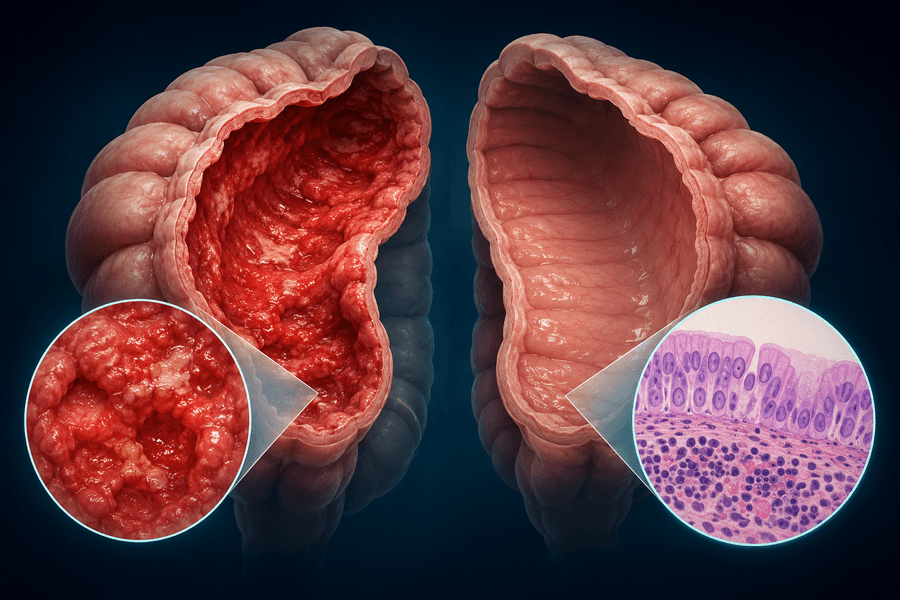 IBD can cause visible inflammation, while microscopic colitis may require biopsy for diagnosis.
When to seek urgent care
Persistent diarrhoea can cause dehydration and disturbances in salts such as sodium and potassium. Seek prompt medical care for inability to keep fluids down, marked weakness, reduced urination, severe or worsening abdominal pain, high fever, significant rectal bleeding, black stools, fainting or confusion. These symptoms should not wait for a routine appointment.
After colonoscopy, urgent medical attention is required for severe or increasing abdominal pain, persistent vomiting, fever, heavy rectal bleeding, dizziness or collapse. Patients should follow the emergency instructions supplied by the treating facility.
Conclusion
Persistent diarrhoea should be assessed according to its duration, pattern and accompanying symptoms. Stool and blood tests may identify the cause in some patients, while others need colonoscopy to look for inflammation, ulcers, polyps, cancer or other structural disease. Biopsies are especially important because microscopic colitis and other tissue-level abnormalities may be present even when the colon looks normal.
If you have diarrhoea that is not settling, night-time symptoms, blood in the stool, unexplained weight loss, anaemia or ongoing abdominal pain, contact Dr Eduan Deetlefs, gastroenterologist in Cape Town, for an individual assessment.
Dr Eduan Deetlefs Inc: Suite 304, 3rd Floor, The Park Building, opposite Vincent Pallotti Hospital, Park Road, Pinelands, Cape Town, 7405. Telephone: 021 202 0626. Email: info@gidoc.co.za. Office hours: Monday to Thursday, 08:00-15:00; Friday is the in-room procedure day, 07:00-16:00.
This article is for general educational purposes and is not a substitute for individual medical advice, diagnosis or treatment.
GIDoc Cape Town

Patient-focused GI treatments and procedures in Cape Town.
Monday-Friday 8AM-4PM.
Connect with Us

© Dr. Eduan Deetlefs, Registered Gastroenterologist, GI Doc Cape Town
Our website information is not intended or implied to be a substitute for professional medical advice, diagnosis or treatment. Please consult a doctor about your specific condition. Only a trained physician can determine an accurate diagnosis and proper treatment.