
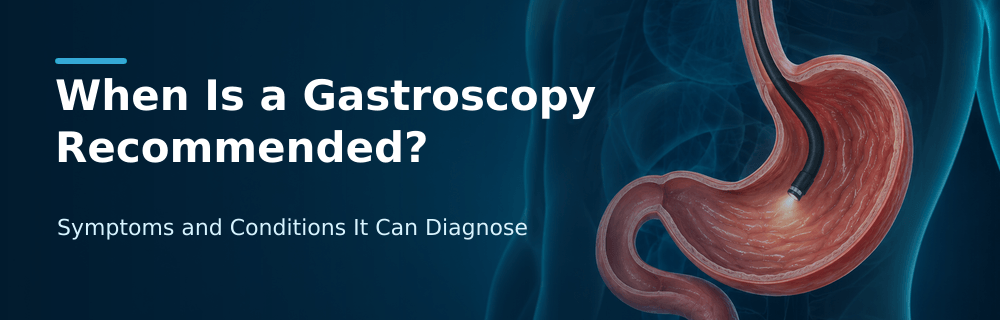
Persistent heartburn, dysphagia and unexplained bleeding should not be ignored. Although these symptoms do not always indicate a serious disease, they may arise from conditions affecting the oesophagus, stomach or first part of the small intestine. A gastroscopy allows a gastroenterologist to examine these areas directly, take biopsies when necessary and, in selected cases, provide treatment during the same procedure.
A gastroscopy is also called an upper gastrointestinal endoscopy or oesophagogastroduodenoscopy. It uses a thin, flexible instrument called an endoscope, which has a light and camera at its tip. The endoscope passes through the mouth, down the oesophagus and into the stomach and duodenum. Images are displayed on a monitor, allowing the specialist to assess the lining of the upper digestive tract in detail.
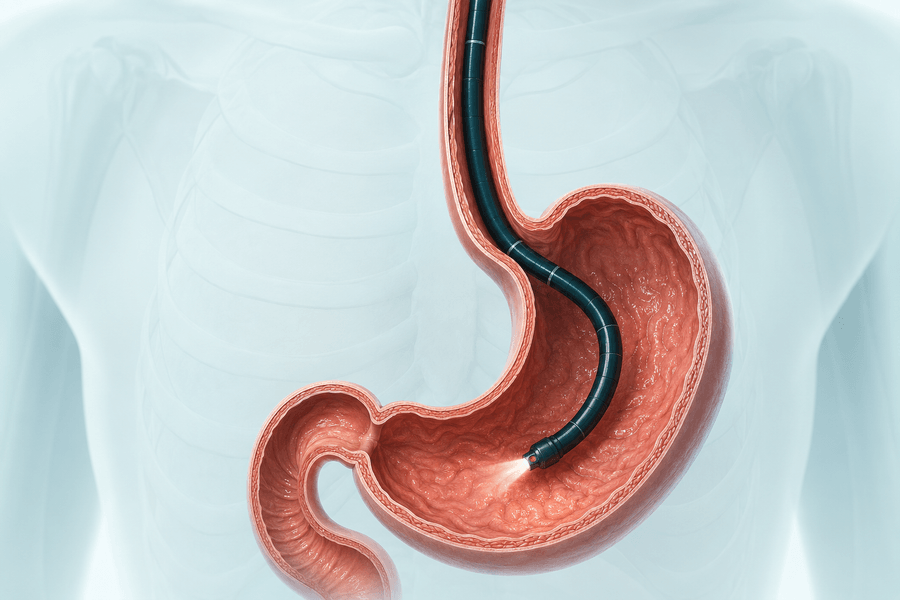
A gastroscopy examines the oesophagus, stomach and duodenum.
When might a gastroscopy be recommended?
A gastroscopy is not required for every episode of indigestion or stomach discomfort. Short-lived symptoms often improve with simple treatment or lifestyle changes. However, further investigation may be appropriate when symptoms persist, recur, worsen, fail to respond to treatment or occur with warning signs.
The decision is based on the patient’s age, medical history, medicines, family history, examination and test results. A specialist may recommend gastroscopy for one or more of the following concerns.
Persistent heartburn or acid reflux
Occasional reflux is common, but frequent or persistent symptoms may require investigation, particularly when medication does not provide adequate relief. Gastroscopy can identify inflammation caused by reflux, ulceration, narrowing of the oesophagus or changes associated with Barrett’s oesophagus.
Barrett’s oesophagus occurs when long-term acid exposure changes the cells lining the lower oesophagus. It does not mean that cancer is present, but it may require biopsy and follow-up because it is associated with an increased risk of oesophageal cancer. GI Doc explains in more detail when acid reflux may warrant a gastroscopy.
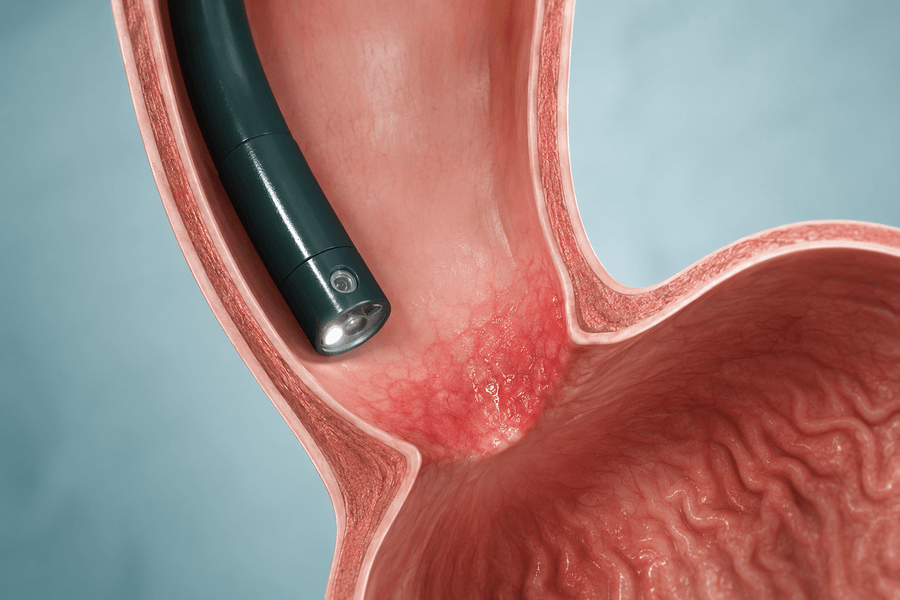 Gastroscopy can assess reflux-related inflammation and Barrett’s oesophagus.
Difficulty or pain when swallowing
The sensation that food sticks in the chest, swallowing that becomes progressively more difficult, or pain when swallowing needs medical assessment. These symptoms may be caused by inflammation, scarring, a stricture, an abnormal ring, eosinophilic oesophagitis, a motility disorder or, less commonly, a tumour.
Gastroscopy helps the specialist see whether a physical narrowing or abnormal area is present. Biopsies may be taken even when the lining looks relatively normal, because conditions such as eosinophilic oesophagitis can require microscopic confirmation. In suitable cases, a narrowed area may be treated with endoscopic dilatation.
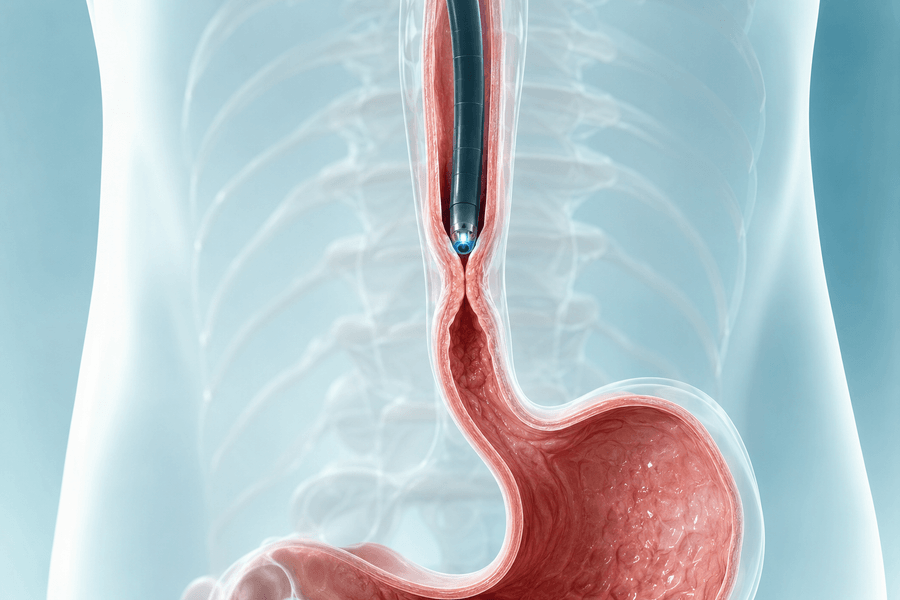 A narrowed oesophagus may contribute to difficulty swallowing.
Persistent upper abdominal pain or indigestion
Ongoing discomfort in the upper abdomen, recurrent indigestion, early fullness after eating or unexplained bloating may be linked to gastritis, peptic ulcer disease, infection or other upper digestive conditions. Symptoms alone cannot reliably distinguish one cause from another.
Gastroscopy gives a direct view of the stomach and duodenal lining. It can identify ulcers, erosions, inflammation and structural abnormalities such as a hiatus hernia. It is important to understand that some people with these symptoms have a normal gastroscopy. A normal examination is still useful because it helps exclude visible disease and guides the next stage of evaluation.
Recurrent nausea or vomiting
Persistent or unexplained nausea and vomiting may justify gastroscopy, especially when accompanied by weight loss, dehydration, pain, anaemia or difficulty eating. The procedure may detect inflammation, ulceration, narrowing or an obstruction at the stomach outlet. Other causes, including medication effects, metabolic disorders and delayed stomach emptying, may need different tests.
Signs of upper gastrointestinal bleeding
Vomiting fresh blood, vomiting material that resembles coffee grounds, or passing black, tar-like stool may indicate bleeding from the oesophagus, stomach or duodenum. These symptoms require prompt medical assessment. A gastroscopy can identify causes such as a bleeding ulcer, severe inflammation, a tear, enlarged veins called varices, or an abnormal growth.
Gastroscopy can be both diagnostic and therapeutic. Depending on the finding, a gastroenterologist may inject medication, apply a haemostatic clip or use another endoscopic technique to control bleeding. GI Doc offers both diagnostic and therapeutic gastroscopy and endoscopy procedures.
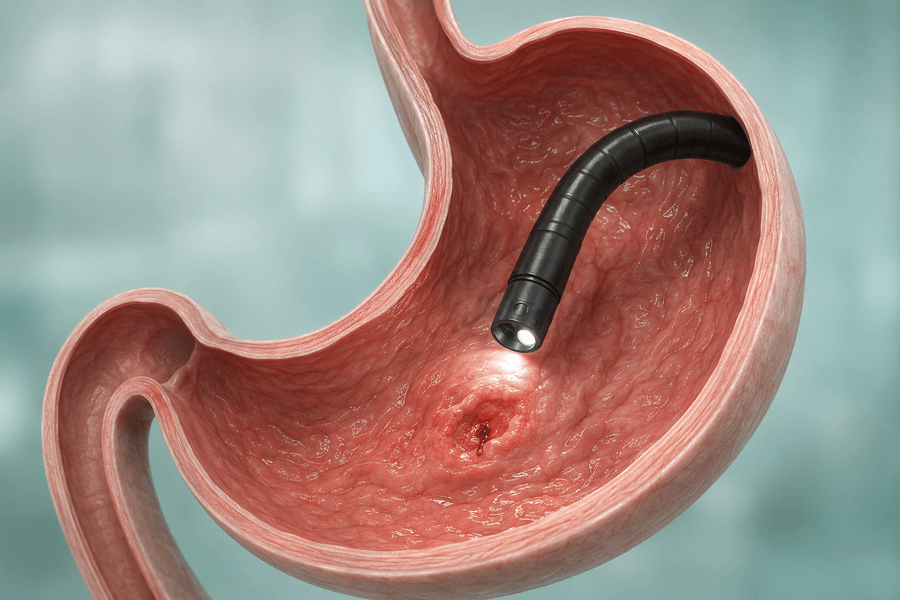 Gastroscopy can identify ulcers and sources of upper gastrointestinal bleeding.
Iron deficiency anaemia
Iron deficiency anaemia can result from gradual blood loss that is not visible. When diet, menstrual loss and other common causes do not fully explain the problem, the digestive tract may need investigation. Gastroscopy may identify ulcers, inflammation, vascular lesions, coeliac disease or an upper digestive tumour. Depending on the patient’s age and circumstances, colonoscopy or small-bowel tests may also be recommended.
Unexplained weight loss or loss of appetite
Unintentional weight loss, reduced appetite, early satiety or progressive symptoms deserve medical attention. These features do not automatically mean cancer, but they are considered warning symptoms because they may occur with significant inflammation, ulcer disease, obstruction or malignancy. Direct examination and biopsy can help establish or exclude important causes.
Abnormal imaging or follow-up of a known condition
Gastroscopy may be advised after an abnormality is seen on a scan or contrast study. It may also be used to monitor a known condition, assess healing after treatment, investigate recurrent symptoms or follow a previously identified abnormality. The timing depends on the condition and the person’s individual risk.
What conditions can a gastroscopy diagnose?
According to the National Institute of Diabetes and Digestive and Kidney Diseases, upper GI endoscopy can help identify conditions affecting the oesophagus, stomach and duodenum. Findings may include:
- Gastro-oesophageal reflux disease and reflux oesophagitis
- Barrett’s oesophagus
- Gastritis and duodenitis
- Gastric or duodenal ulcers
- Hiatus hernia
- Oesophageal strictures, rings or other narrowing
- Eosinophilic oesophagitis
- Coeliac disease, when confirmed by duodenal biopsies
- Helicobacter pylori-associated gastritis
- Oesophageal or gastric varices
- Benign polyps and other abnormal growths
- Oesophageal, stomach or upper duodenal cancer
Not every condition is visible to the naked eye. This is why biopsy can be an important part of the examination.
Why are biopsies taken?
A biopsy is a tiny sample of tissue collected through the endoscope. Patients do not usually feel the tissue being taken. The sample is examined by a pathologist under a microscope.
Biopsies may be used to test for Helicobacter pylori, confirm coeliac disease, diagnose eosinophilic oesophagitis, evaluate inflammation, assess Barrett’s oesophagus or determine whether abnormal cells are benign, precancerous or cancerous. A biopsy does not necessarily mean that cancer is suspected; it is a routine diagnostic tool in many upper digestive conditions.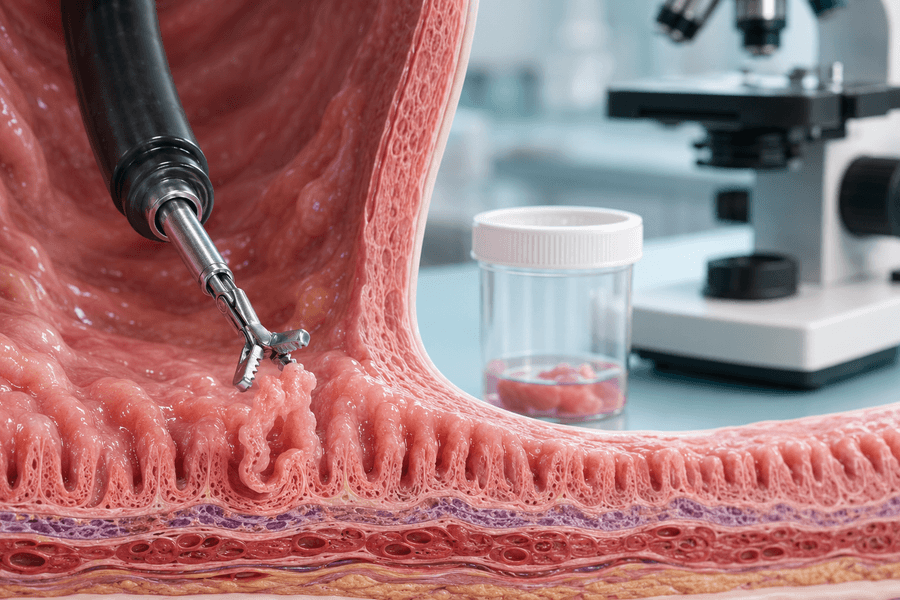 Small tissue samples can be collected for microscopic analysis.
What happens before and during the procedure?
Patients receive specific preparation instructions from their doctor. Fasting is necessary so the stomach is empty and the lining can be seen clearly. The Mayo Clinic’s upper endoscopy guidance also emphasises discussing medicines beforehand, especially blood thinners, diabetes treatment, iron supplements and anti-inflammatory pain medicines. Patients should not stop prescribed medication unless instructed by their healthcare professional.
Before the procedure, the team reviews the patient’s medical history, allergies and consent. A throat-numbing spray and/or sedation may be used. The patient lies on their side while the endoscope is gently passed through the mouth. It does not block breathing. The procedure itself is usually brief, although extra time may be needed if biopsies or treatment are performed.
Dr Deetlefs’ guide to what happens during a gastroscopy provides additional practical information for patients.
Afterwards, temporary bloating, mild nausea or a sore throat may occur. If sedation was given, the patient needs someone to take them home and must follow the practice’s restrictions on driving, alcohol, work and important decisions. Some findings may be discussed immediately, while biopsy results take longer.
Is gastroscopy safe?
Gastroscopy is generally considered a safe procedure. Complications are uncommon, but can include a reaction to sedation, bleeding, infection or a tear in the digestive tract. The risk may be higher when treatment is performed than when the procedure is purely diagnostic.
The NHS gastroscopy guidance advises urgent medical attention after the procedure for worsening chest or abdominal pain, breathing difficulty, fever, vomiting blood, black stool, or swallowing problems that are severe or getting worse. Patients should use the emergency contact instructions supplied by their treating facility.
Gastroscopy does not diagnose every digestive problem
Gastroscopy examines the lining of the upper digestive tract, but it does not assess the entire small bowel or colon. It also cannot by itself diagnose every functional, motility, pancreatic, gallbladder or liver disorder. Blood tests, ultrasound, CT or MRI, colonoscopy, capsule endoscopy, pH monitoring or other investigations may be more appropriate in some situations.
The aim is not simply to “have a scope,” but to select the investigation most likely to answer the clinical question. A gastroenterology consultation allows symptoms, risk factors and previous results to be considered together before a procedure is planned.
Conclusion
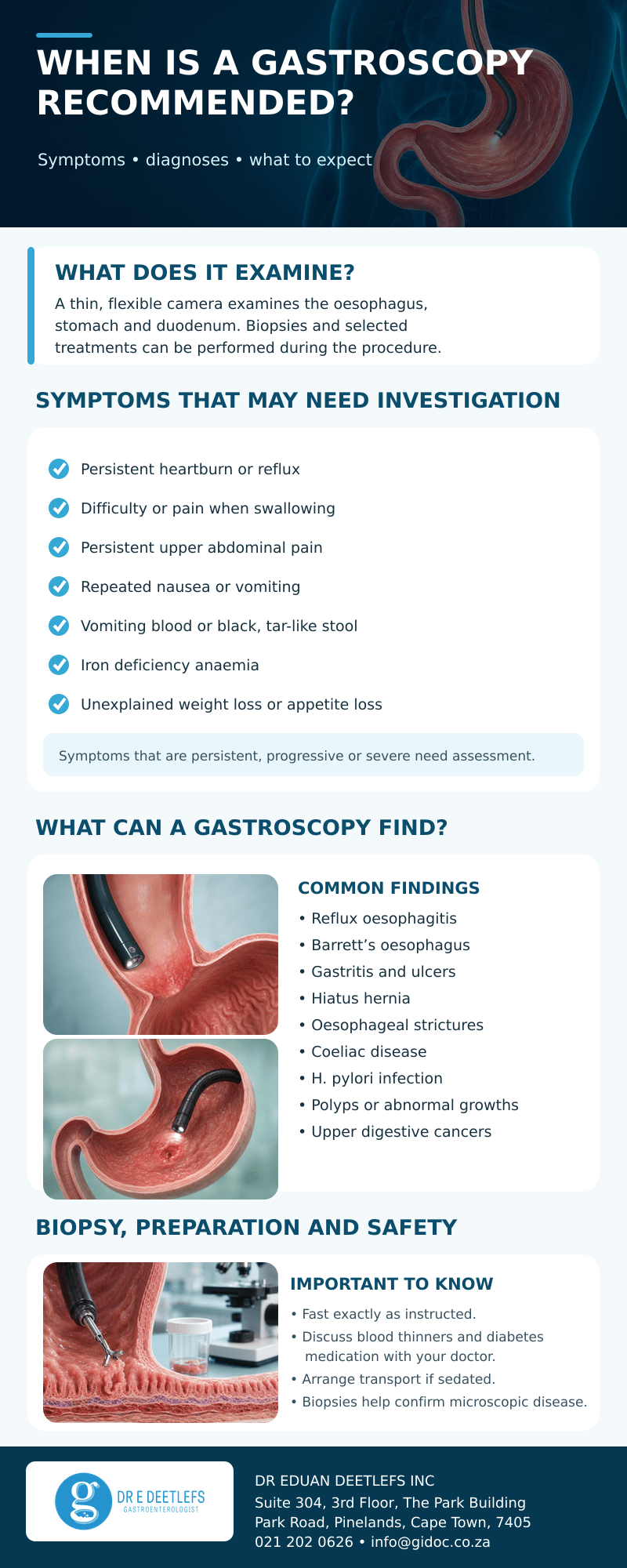
A gastroscopy may be recommended when upper digestive symptoms are persistent, progressive or associated with warning signs such as difficulty swallowing, gastrointestinal bleeding, iron deficiency anaemia, repeated vomiting or unexplained weight loss. It can diagnose inflammation, ulcers, narrowing, Barrett’s oesophagus, coeliac disease and abnormal growths, while biopsy provides information that cannot always be seen during the examination. In some cases, treatment can also be performed during the procedure.
If you are experiencing these symptoms or have been advised to undergo a gastroscopy, contact Dr Eduan Deetlefs, gastroenterologist in Cape Town, for an assessment.
Dr Eduan Deetlefs Inc
Telephone: 021 202 0626
Email: info@gidoc.co.za
Website: www.gidoc.co.za
GIDoc Cape Town

Patient-focused GI treatments and procedures in Cape Town.
Monday-Friday 8AM-4PM.
Connect with Us

© Dr. Eduan Deetlefs, Registered Gastroenterologist, GI Doc Cape Town
Our website information is not intended or implied to be a substitute for professional medical advice, diagnosis or treatment. Please consult a doctor about your specific condition. Only a trained physician can determine an accurate diagnosis and proper treatment.