021 202 0626
Managing IBD Pain: How to Find Relief During a Flare-Up

Managing IBD Pain: How to Find Relief During a Flare-Up


What is Irritable Bowel Disease


Irritable bowel disease or IBD, is a disorder that affects the large intestine.

The two main types are ulcerative colitis and Crohn’s disease. Symptoms include abdominal pain, diarrhea, weight loss, and fatigue.

Treatment depends on the severity of the disease and may include lifestyle changes, medication, or surgery.

This article explains everything about IBD.  We discuss symptoms, causes and lifestyle changes you can make to cope with IBD.


Irritable Bowel Disease Symptoms


Irritable bowel disease (IBD) is a chronic (long-term) condition that affects the digestive system.

IBD can cause a range of symptoms as follows:


  • Abdominal pain
  • Diarrhea or constipation
  • Fatigue
  • Weight loss
  • Gas and bloating
  • Loss of appetite
  • Mucus or blood in stool
  • Upset stomach

Some people with IBD also have other conditions, such as arthritis or eye problems.

If you have IBD, it is important to work with your healthcare team to manage your symptoms and prevent

If you think you might have irritable bowel disease, it’s important to see a doctor to get a diagnosis and treatment.

There are many ways to diagnose IBD, but the most common is through a colonoscopy. This is where a doctor inserts a small camera into your rectum and colon to look for any inflammation or ulcers.

Other ways to diagnose IBD include an upper GI endoscopy, CT scan, or MRI.

Irritable Bowel Disease Causes


IBD can be extremely debilitating and can cause a great deal of pain and discomfort.

There are several different theories about what causes IBD, but the exact cause is still not known.

It is thought that IBD is caused by a combination of genetic and environmental factors.

Some studies have shown that people with certain genetic mutations are more likely to develop IBD.

However, it is not clear why these mutations lead to the development of IBD. Environmental factors are most likely to play a role in the development of IBD.

ibd_symptoms


Common Flare-up Management Techniques


If you have inflammatory bowel disease (IBD), you know that flare-ups can be frustrating.

While there is no cure for IBD, there are ways to manage your symptoms and prevent flare-ups.

Here are some flare-up management techniques: 

Follow A Healthy Diet
Eating a nutritious diet is important for everyone, but it’s especially important for people with IBD.

A healthy diet can help reduce inflammation and prevent flare-ups. Be sure to eat plenty of fruits, vegetables, and whole grains.

And limit your intake of saturated fats, processed foods, and refined sugars.

Get Regular Exercise
If you have inflammatory bowel disease (IBD), you may be wondering if exercise is safe and whether it’s something you should be doing.

The short answer is yes, exercise is generally safe for people with IBD, and it offers a number of benefits.

Exercise can help reduce stress and fatigue, improve sleep, and increase your sense of well-being.

It can also help you maintain a healthy weight, which is important because being overweight or obese can make IBD symptoms worse.

There are many different medications that can be used to manage IBD flare-ups.


Pain Medication

Some of the most common medications include:

Anti-Inflammatory Drugs
These drugs can help to reduce inflammation in the intestines.

Immunosuppressive Drugs
These drugs can help to suppress the immune system and reduce inflammation.

Antibiotics
These drugs can help to kill bacteria that may be causing the inflammation.

Probiotics
These live microorganisms can help to restore the balance of good bacteria in the intestines.

If you are experiencing a flare-up, it is important to talk to your doctor about which medications may be right for you.

ibd_treatments

Diet and Lifestyle Changes

If you live with inflammatory bowel disease (IBD), you know that flares can be unpredictable and frustrating.  While there is no surefire way to prevent flares, there are some diet and lifestyle changes that may help.

Here are a few common flare-up management techniques to try:

Identify and avoid your trigger foods.
Different people with IBD have different trigger foods, so it’s important to figure out what yours are. Once you know what to avoid, it will be much easier to keep flares at bay.

Eat a well-balanced diet.
When you’re in a flare, it’s important to eat a nutritious diet to help your body heal.

Stress Management
Stress can be a common trigger for flare-ups in IBD. Learning some stress management techniques can help you to better control your symptoms.

Relaxation techniques such as yoga or meditation can help to calm the mind and the body. Identifying the things in your life that are causing you stress and finding ways to eliminate or reduce them can also be helpful. 

ibd_surgery


Surgery

For some people with IBD, surgery is the best treatment option. IBD surgery can be used to remove part of the intestine (a procedure called resection) or the entire intestine (a procedure called colectomy).

Surgery can also be used to remove an abscess or fistula. Surgery is usually only considered when other treatments, such as medication, have not worked.


The Impact of IBD On Daily Life

IBD can have a significant impact on a person’s quality of life. The symptoms of IBD can be very disruptive to daily life.

Many people with IBD experience fatigue, abdominal pain, and diarrhea. These symptoms can make it difficult to work, exercise, or even go out in public.

This is why making lifestyle changes can be so beneficial for an IBD patient.


The Need for Changes in Lifestyle


If you are affected by inflammatory bowel disease (IBD), you know that the condition can have a major impact on your life.

IBD can be debilitating and can lead to a number of other health problems.

Making lifestyle changes is often a necessary part of managing IBD. These changes can be difficult, but they are often necessary to help control symptoms and prevent flares.

By making some lifestyle changes, you can take control of your IBD and improve your quality of life.

Work with your doctor to make some lifestyle changes and take control of your IBD.


Home Remedies For IBD


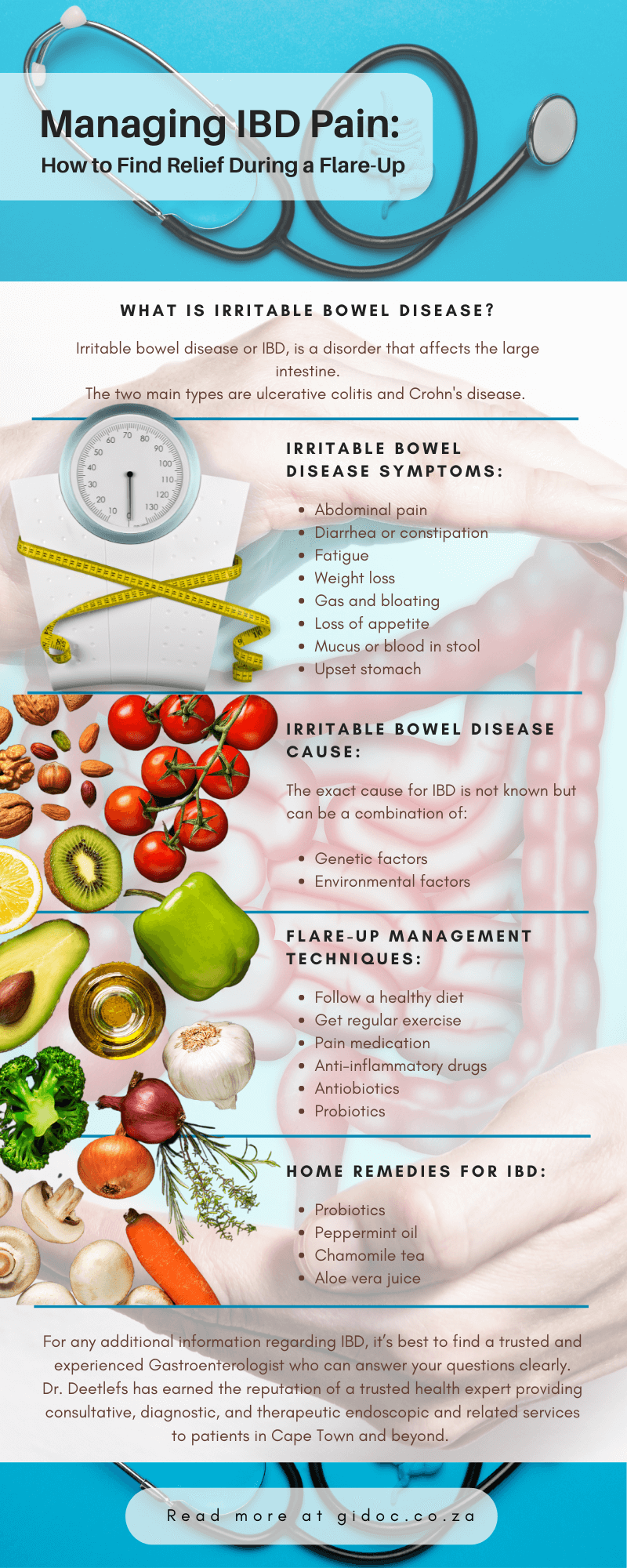
There are many different home remedies that people swear by for treating irritable bowel disease (IBD), and it can be tough to know which ones to try.

Some common home remedies include probiotics, peppermint oil, chamomile tea, and aloe vera juice.

Probiotics are live bacteria that can help to restore the balance of gut bacteria, which is often out of balance in people with IBD.
Peppermint oil has anti-inflammatory and antispasmodic properties, which can help to relieve symptoms of IBD.

Chamomile tea is a relaxing herbal tea that can help to reduce stress, which can trigger IBD symptoms.
Aloe vera juice is also thought to be beneficial for IBD patients as it can help to soothe the digestive tract.
 ibd_management_infographic


Conclusion

It is important to work with your doctor to develop a pain management plan that is right for you. Don’t hesitate to ask for referrals to pain specialists or other health care providers if you need additional help.

Be sure to keep an open line of communication with your doctor to let them know what treatments are working and which are not.

Living with IBD can be challenging, but by working closely with your health care team and taking an active role in your disease management, you can find relief and lead a full, active life.

For any additional information regarding IBD, it’s best to find a trusted and experienced Gastroenterologist who can answer your questions clearly, recommend appropriate solutions, and perform tests with precision and expertise.

Dr. Deetlefs has earned the reputation of a trusted health expert providing consultative, diagnostic, and therapeutic endoscopic and related services to patients in Cape Town and beyond. 

Dr. Deetlefs can be contacted to confirm the estimated breakdown should you be interested in having the procedure done.

GIDoc Cape Town

Patient-focused GI treatments and procedures in Cape Town.

Monday-Friday 8AM-4PM.

Connect with Us

© Dr. Eduan Deetlefs, Registered Gastroenterologist, GI Doc Cape Town

Our website information is not intended or implied to be a substitute for professional medical advice, diagnosis or treatment. Please consult a doctor about your specific condition. Only a trained physician can determine an accurate diagnosis and proper treatment.

Colonoscopy Explained: What to Expect and How to Prepare

Colonoscopy Explained: What to Expect and How to Prepare

What Is a Colonoscopy?


A colonoscopy is a medical procedure used to examine the large intestine (colon) and rectum.

The colon and rectum are part of the digestive system.

The colonoscopy procedure involves inserting a long, flexible tube (colonoscope) into the rectum.

The colonoscope has a camera at the end which allows the doctor to see the inside of the colon and rectum.

A colonoscopy can be used to diagnose and treat various conditions of the colon and rectum, such as colorectal cancer, inflammatory bowel disease, and gastrointestinal bleeding.

A colonoscopy is generally a safe and well-tolerated procedure.

In this article we will discuss everything you need to know about this procedure and more.


Why Is a Colonoscopy Performed?


The purpose of a colonoscopy is to screen for and detect potential problems, such as colorectal cancer or polyps.

It is considered to be the best method for diagnosing and detecting certain conditions of the colon.

If any abnormal areas are detected, biopsy (tissue sampling) or colon polyp removal will be done.

importance_of_a_colonoscopy


The Importance of a Colonoscopy?


A routine screening can avoid many colorectal cancers.

Catching colon cancer in its early stages and seeing a doctor regularly will ensure that your condition is monitored and treated effectively.


What Happens During a Colonoscopy?


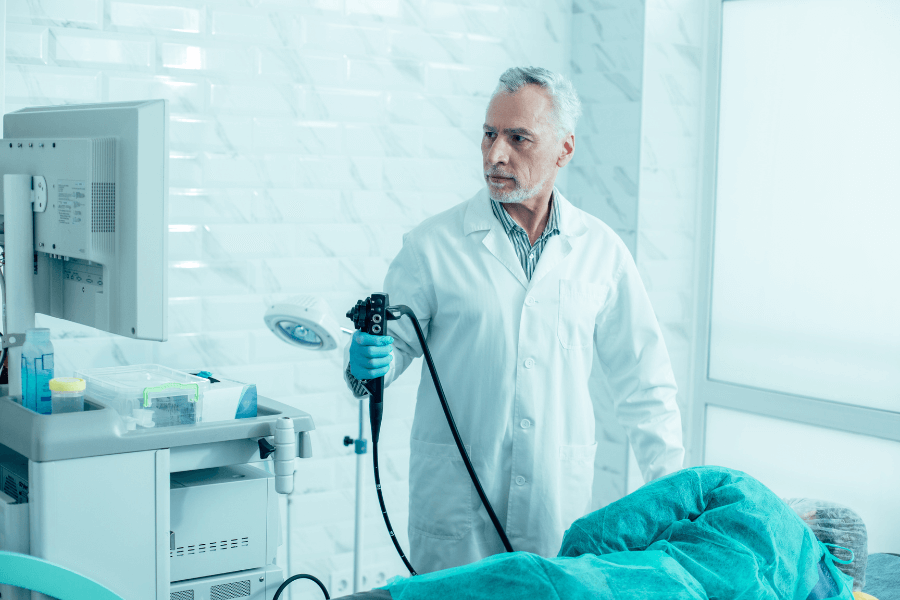
A flexible, lighted tube called a colonoscope is used.

This tube is about the thickness of your little finger and has a tiny video camera at its tip.

Your doctor will ask you to lie on your left side on an exam table. Sedation or anesthesia is usually recommended. 

The colonoscope will be inserted into your rectum. The scope contains a light and a tube which allows your doctor to pump air into your colon.  This method allows a better view of the lining of your colon.

As it moves through your colon, the tiny video camera sends images to an external monitor which makes it possible for your doctor to view the inside of your colon.

This procedure normally takes about 30 to 60 minutes.

Colonoscopy_cancer_importance


The Different Types of Colonoscopies


There are two types of colonoscopies: diagnostic and therapeutic.

Diagnostic colonoscopy is performed to find the cause of bleeding or other symptoms, such as abdominal pain or a change in bowel habits.

Therapeutic colonoscopy is performed to treat conditions, such as remove polyps or take biopsies.

What Are the Risks of a Colonoscopy?


A colonoscopy is a common medical procedure used to screen for colorectal cancer.

While the procedure is generally safe, there are a few potential risks involved.

These risks include:

– Perforation: A colonoscopy involves inserting a long, thin tube into the rectum and colon. In rare cases, this tube can cause a small tear in the lining of the bowel, known as a perforation. This can lead to infection or internal bleeding.

– Bleeding: The colonoscopy procedure can sometimes cause bleeding from the bowel. This bleeding is usually minor and stops on its own. In rare cases, more serious bleeding may occur and require treatment.

– Infection: There is a slight chance of your body having a reaction to the sedative used during the exam.

How To Prepare for A Colonoscopy


If you have been scheduled for a colonoscopy, you may be wondering what to expect and how to prepare.

Before colonoscopy, your colon must be completely cleaned out so that the doctor can see any abnormal areas.

Without proper preparation the colonoscopy will not be successful and may have to be repeated.

To clean the colon, you will need to follow the prescribed diet and take a strong laxative to empty your bowels.

Your doctor’s office will provide specific instructions about how you should prepare for colonoscopy.

Be sure to read these instructions ahead of time so you will be prepared for the prep. If you have questions, contact the doctor in advance.

You will need to avoid solid food for at least one day before the test. You should also drink plenty of fluids on the day before the test.

You can drink clear liquids up to several hours before your procedure, including water, clear juice (apple, grape), Energade or similar alternative, clear soup (beef, chicken, or vegetable), coffee or tea (without milk) or jelly (avoid red jelly).

The day or night before the colonoscopy, you will take a laxative. It consists of a powder that is mixed with water.

The most common laxative treatment is called “Klean-Prep”.

You can add some lemon squash to hide the unpleasant taste. Refrigerating the solution can make it easier to drink.

Drinking this solution may be the most unpleasant part of the exam. You will begin to have watery diarrhoea within a short time after drinking the solution.

If you become nauseated or vomit while drinking the solution, call your doctor or nurse for instructions.  

colonoscopy_preparation

 What Can I Expect After a Colonoscopy?


After the colonoscopy, you will be observed in a recovery area until the effects of the sedative medication wear off.

The most common complaint after colonoscopy is a feeling of bloating and gas cramps. You may also feel groggy from the sedation medications. You should not return to work or drive that day.

Most people are able to eat normally after the test.

Ask your doctor when it is safe to restart aspirin and other blood- thinning medications.


How Often Should You Get Screened for Colon Cancer?


So, how often should you get screened for colon cancer? The answer is simple: every 10 years beginning at age 50.

But why is screening so important?

Screening tests like colonoscopies can find precancerous polyps so they can be removed before they turn into cancer.

In fact, colon cancer death rates have declined by 30% over the last two decades thanks to screening and early detection.

Screening for colon cancer is important for everyone over the age of 50.

It’s important to talk to your doctor about how often you should be screened.


How to Choose a Colonoscopy Doctor?


If you’re considering a colonoscopy, you’ll want to choose a doctor you feel comfortable with.

Here are a few things to keep in mind when making your decision:

– Ask for recommendations from family and friends. If someone you trust has had a good experience with a particular doctor, that’s a good place to start.

– Check with your insurance company. They may have a list of approved providers.

– Once you’ve narrowed down your choices, take the time to read reviews and check out the doctor’s credentials.

– Schedule a consultation. This is your chance to ask questions and get a feel for the doctor’s bedside manner.

– Trust your gut.

colonoscopy_explained_infographic


Contact Dr. Deetlefs


Although these remedies and guidelines might alleviate the pain, it is recommended to get a professional diagnosis from your doctor or gastroenterologist in order to discuss the way forward.

A colonoscopy is a quick and painless procedure that can save your life.

It’s important to know what to expect and how to prepare so you can be as comfortable as possible during the procedure.

Dr Eduan prides himself on his ability to help his patients to the best of his ability by embracing good listening skills, effective communication, compassion and knowledge and skill honed during years of private gastroenterology practice.

If you would like to book an appointment with a gastrointestinal (GI) specialist or would simply like more information on a particular GI topic, don’t hesitate to use our online booking form or call Dr. Deetlefs at 021 551 867.

GIDoc Cape Town

Patient-focused GI treatments and procedures in Cape Town.

Monday-Friday 8AM-4PM.

Connect with Us

© Dr. Eduan Deetlefs, Registered Gastroenterologist, GI Doc Cape Town

Our website information is not intended or implied to be a substitute for professional medical advice, diagnosis or treatment. Please consult a doctor about your specific condition. Only a trained physician can determine an accurate diagnosis and proper treatment.